We are thrilled to be featuring a guest blog by one of our Make and Create Clubber parents. They have become an integral part of our community since their youngest attended a Make and Create holiday club last summer. We weren’t sure if they would stay with us as their eldest wasn’t able to access many other home ed clubs. We remained curious as to whether we could provide enough flexibility for it to work for both and in collaboration, we nailed it. Reading this blog made us both shed a tear, creating an inclusive space for families, including our own, is why we continue to show up each week.
Educating Hatbeasts writes a fantastic blog all about parenting and educating neurodivergent children. You’ll find their original blog here: https://educatinghatbeasts.substack.com/p/michael-gove-ate-my-spaniel-part
In the wilds of south-east London, there is a very special place. For some children, it may be among the most special in the world.
And, no, it isn’t Disney (thankfully, for both my boys).
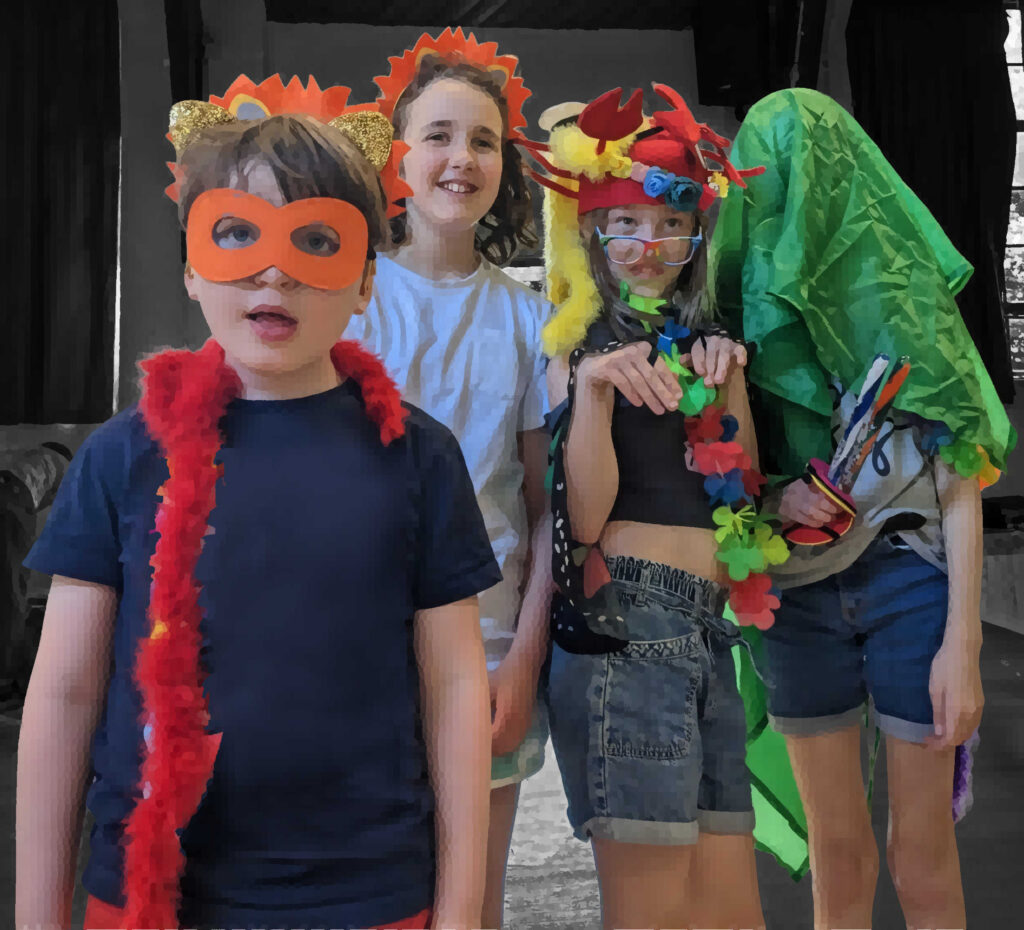
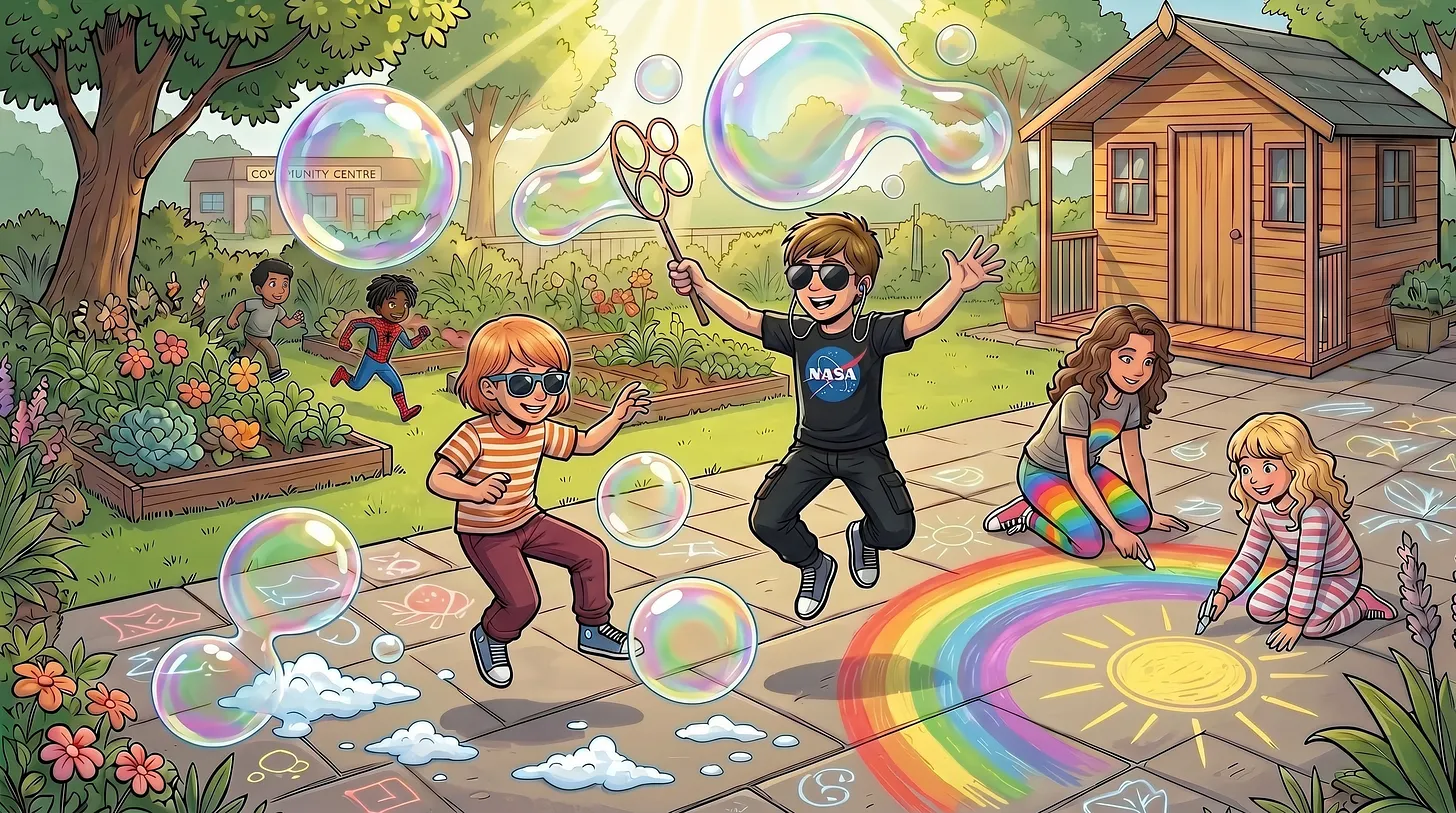
On a warm sunny Monday, if you were to walk past in the early afternoon, you’d hear children laughing and shouting. If you looked over the fence into the community gardens, you’d see a group of primary- and early-secondary-aged kids blowing giant bubbles, playing tag, drawing with chalk and – occasionally – even making short films of each other. Indoors, meanwhile, other children might be playing with sensory Oobleck, building Brio railways, crocheting with friends, cooking with grown ups, or even making models with a hot glue gun.
None of this should seem surprising, but many of these kids are among some of the most complex and hard-to-school in the UK. Not because they have severe physical or learning disabilities. Rather, they are (largely) what disability campaigner Lisa Lloyd has described as SEN-Betweeners.
“Too severe for mainstream, not severe enough for SEND school. Don’t help them when they’re failing. Don’t catch them when they fall.”
Lisa Lloyd in her bestselling book, Raising the SEN-Betweeners
SEN-Betweeners don’t have the severe learning and language disabilities of children (usually straightforwardly) offered one of the oversubscribed places in one of England’s 1,000 state-funded special schools. They can talk, run about, play together and carry out basic self-care activities, such as feeding themselves. They are also academically able – sometimes exceptionally so.
Nonetheless, what these young children have in common is neurological disabilities, ranging from autism/ADHD-like conditions to Tourette’s, hearing difficulties and genetic disorders, significant enough to have caused them extreme distress within days/weeks of starting nursery or primary school. Frequently, they went into burnout – a phenomenon more commonly with high-powered executives than autistic eight year olds. One regular attendee, meanwhile, has always been home educated as he is so medically complex that his mum felt (justifiably) his life was at risk simply by attending an (under-resourced) mainstream school.
A large percentage of regulars also have what’s called ‘PDA’, a behavioural profile associated (in every PDAer I’ve met so far) with tactile hypersensitivity whereby their moment-to-moment sensory perceptions can be so intense that even everyday demands and parental requests exceed their coping capacity. Some of these children even struggled in more ‘alternative’ settings, such as Montessori, because of a combination of the sensory environment and the nervous system uncertainty of adult-driven learning. The PDA Society estimate around 70% PDAers either aren’t in school or struggle to attend even specialist provision (Lisa Lloyd’s PDA daughter, Poppy, is currently showing signs of distress at her special school).
What’s remarkable about this setting is this myriad of complex kids, including my very-hard-to-accommodate-anywhere Bigger Boy, will be frequently organising games and socialising in a way not seen as typical for autistic/ADHD children. And, in many cases, you simply wouldn’t even know, upon a casual glance, they were any different from their same-age peers.
The success of Make & Create comes from its ethos. The idea is many of these children’s nervous systems are so regularly overwhelmed by the sheer process of existing that playfully being a child comes second, third and last to emotional survival. For them to begin to thrive and develop healthily, the environment should feel as emotionally safe as possible.
As examples:
- Families can drop in and out during opening times – there’s no obligation to turn up at the start or stay until the end;
- Everything is optional with a mixture of self-led arts and crafts (such as model making with hot glue) and adult-led activities, like cooking, that kids can opt into;
- All activities are advertised beforehand and each activity ‘station’ stays in the same location in the hall each week, but also varies slightly, with the types of activity being tailored to the changing interests of regular attendees;
- Parents are allowed to stay with their kids, often for months, sometimes long-term, such that it becomes a ‘stay-and-play’ for some families (I’m one of these);
- There’s no pressure to socialise. Some kids just sit on a cushion for most of the session, either reading a book or watching a tablet with headphones on. A fraction of kids even rock up in pyjamas;
- Numbers are kept relatively low to avoid stressing the kids. The most children who’ve been booked has been 22 (I think) and, even then, we were all ‘warned’ it was going to be a full session.
Although Bigger Boy isn’t their target audience (he’s not ADHD and only demand avoidant when sick), he thrives there – mostly hanging around outside and coming indoors periodically to play with his little brother. Over the course of months, he’s learned to regulate his extreme sensory sensitivities by regularly shifting from the outdoors into the (louder) hall, occasionally hiding in an indoor pop-up tent or the outdoor Wendy house when the noise or playful chaos gets too much. Smaller Boy’s playmates have become familiar with him and, over time, he’s begun interacting spontaneously with other children until, eventually, in an organic way, he’s become an integral part of the group.
Given he was socially isolated in school, with an EHCP goal to “engage in structured playground games with familiar peers and adult support for up to 10 minutes”, the fact he organises structured playground games with no adult input and actively helps out the younger kids (including some with complex needs) is a testament to his hard work and the brilliance of this very special setting – as well as another amazing drop-off group he attends. Even his distinctive formal manner and “Asperger’s little professor voice” has vanished. As a result of spending more time with peers, including Smaller Boy, he sounds and acts much more like a typical nine year old (it seems the symptoms described by Hans Asperger are not innate to autism, but constructed by socially-copying adults due to social isolation from other kids).
In short, he is unrecognisable from the child who left school 18 months ago.
Towards a new model of inclusion
Most of us recognise our non-human companions don’t all share the same nervous systems. We know that Border Collies can be noise reactive and struggle with the sound of fireworks while gundogs, such as Spaniels and Labradors, tend to be steadier.
Although everyone is comfortable that some dogs staying indoors on Bonfire Night isn’t a moral issue, our children are expected to act like they have consistent neurology. Even when people accept some kids are more sensitive than others, this is often assumed to be emotional sensitivity, a psychological problem to be overcome, and not a physiological response to fundamental differences in information processing. Even though many kids with fatal degenerative nervous system diseases like Batten Disease and MPS III SanFilippo often exhibit heightened sensitivity to noise or chaotic situations, along with sensory seeking behaviours and/or a preference for the familiar, there still doesn’t seem to be any joined-up thinking about how similar neurological differences might exist, inborn, as standalone conditions in cognitively-able kids.
Expecting resilience from a child already overwhelmed due to how their brain functions is akin to tossing them into the deep end of a swimming pool and being surprised when they don’t learn breast stroke.
Some kids need firmer ground to stand on and, only then, will they fly.
And if they still don’t learn to fly, this is because they are long-term disabled. Asking struggling kids to cope with intolerable situations because “what will happen when they get older and have to cope with the outside world?” is thus about as helpful as asking a child using a wheelchair what will happen if every future workplace has stairs.
The point being that about 1-2% of the UK’s school population were absent with Emotionally-Based School Avoidance (EBSA) in 2025. The vast majority of children with school distress are neurodivergent and the vast majority of neurodivergent kids have sensory issues. Diagnoses of neurodivergent conditions are exploding, with the number of boys aged 10-16 diagnosed with ADHD tripling in two decades, and 1 in 34 10 to 14 year olds now diagnosed with autism – suggesting kids with less noticeable behaviours are increasingly flagged as unable to cope. Dissatisfaction with schooling in England is also growing, with, for example, 75% of new home education now being driven by unmet special educational, health or mental health needs.
Yesterday alone, I spoke with two mums of primary-age boys with suspected ADHD struggling with school attendance due variously to classroom noise and other kids’ behaviour, minor disabilities their school wasn’t supporting, and deep emotional distress over strict behavioural policies that, although they weren’t personally affected, they deemed unfair to friends.
Nothing in the UK government’s SEND White Paper seems designed to address any of these issues, especially the problems of noisy crowded classrooms and/or kids feeling emotionally unsafe in school.
Something needs to change.
I get a sense from the UK government that it sees home education and alternative provision as problems to be fixed or, perhaps, competition to be eradicated. But, in fact, they may form part of the solution to the current school SEND crisis. I wanted to write a blogpost (or two) outlining some ideas about what that might involve. Part 2 will unpick the direction of travel of government policy on childhood and think about how (since not every parent wants to, can or should home educate), diversity of choice in the education system might help to include more kids.
Leave a Reply
You must be logged in to post a comment.