This post dives into some heavy stuff – school refusal, unmet needs, generational trauma, references to feeling suicidal, self-medication, depression, unrecognised neurodivergence, and includes some colourful language because sometimes life calls for strong words. We’re all about radical honesty here, but we also want you to feel safe in our space. Take care of yourself, fellow humans.
Through formal mainstream education, I have achieved 6 passes (C grade or above) GCSE’s and 2 A levels, gained a 2:1 BSc (hons) degree and passed a Post Graduate Certificate in Education (PGCE). That looks like a success story, right? In terms of our neuronormative society, it certainly seems that way. After all, it enabled me to have a 19-year career as a teacher, so what’s the problem? The problem is the side effects. I felt them throughout the system and I’ve lived with them ever since. These side effects weren’t listed anywhere on the outside of the schooling box I was placed in. But they should have been. In bold type, with accompanying gruesome pictures, just like on cigarette packets today. Why? Because they weren’t only damaging; they were life-altering and at points nearly life-ending.
What that list of academic achievements doesn’t show you is that I have crashed into burnout more than once, I’ve failed exams, dropped out of courses, gone back for retakes & failed again, all while the emphasis was on me to do better, to focus more, to be less distracting to myself and friends around me. I was diagnosed as AuDHD at 49 years old. My needs were never identified at school, let alone being accommodated or met.
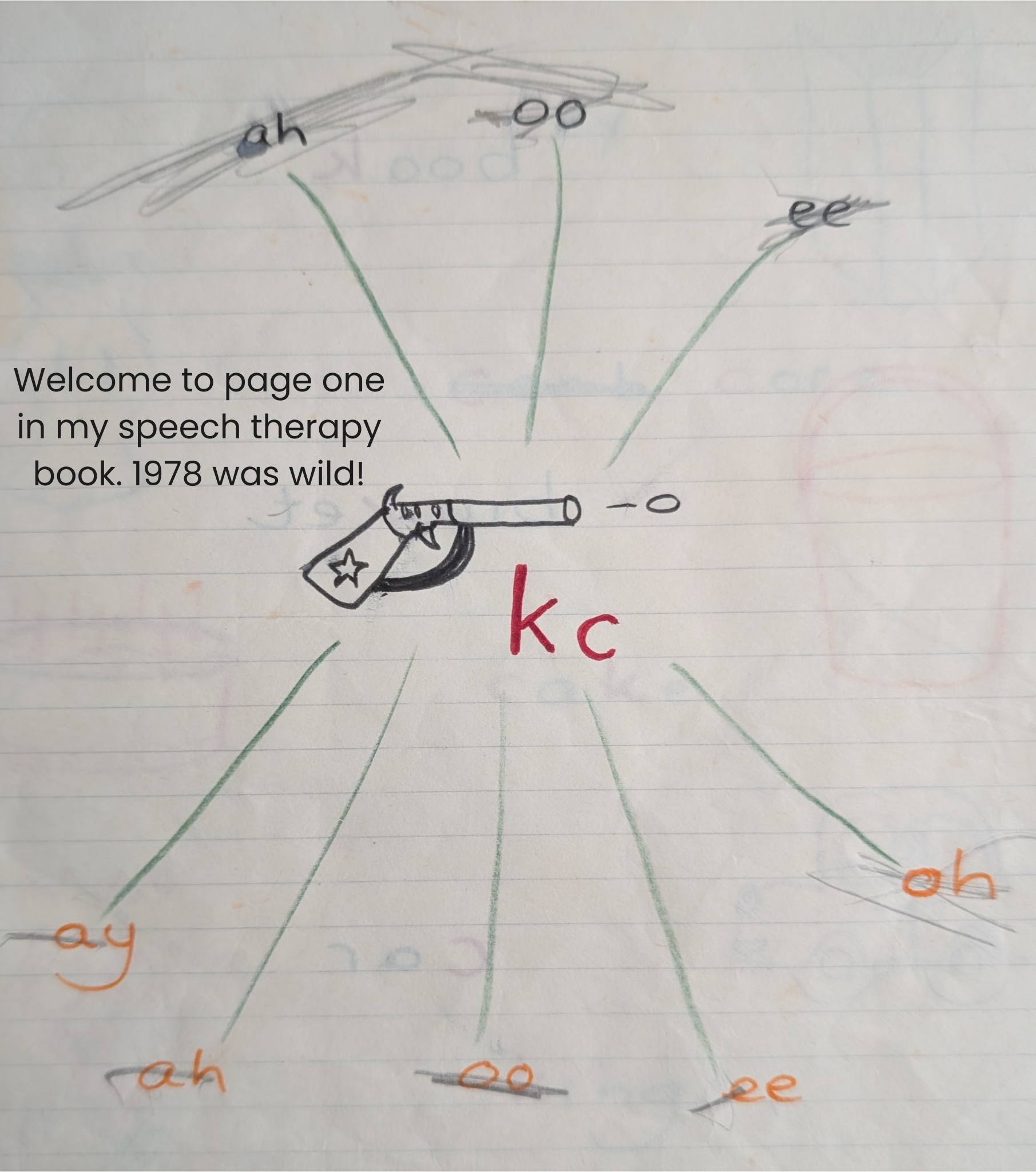
Being formally educated actually started for me at around 3 and a half years old. I was apparently chatty, but the words and sounds I was trying to use came out jumbled. My Mum had difficulty understanding me, and I was becoming more and more frustrated and angry at not being able to verbally communicate or to be understood. It just so happened that in 1978, there was a Speech Therapist based in my village outside of Maidstone, so off I went for 1:1 sessions where I was essentially taught phonics over the course of about six months or so. During that time, not only did my speech improve, but I also learnt how to read. Looking back, this is probably where my educational needs stopped being recognised and met. I finally started to figure out what I needed for myself when I went back to University at age 21 to get my vocational degree. I also learned more about myself as an academic learner during my PGCE at age 25. It wasn’t until I reached my late 40’s that I finally started to unravel and figure out my human needs, which was a result of realising my neurodivergence. It’s been a rollercoaster of a ride for sure, and none of it was easy.
Looking back, I always felt like I quite enjoyed Primary School, but apparently I struggled after the infants (KS1) due to the increased sit-down demands of learning. I don’t think I let on at school though. I do remember one child being bent over the headteacher’s knee in front of the whole school in assembly and ‘given the slipper’, so I reckon that fear was a big part of it! After that, secondary school wasn’t just difficult; it was brutal. Now I know my neurotype, it’s no wonder I struggled with the executive functioning challenges of swapping rooms with every change of subject, the heavy handed demands of rules, social challenges, uninteresting subjects, extreme shifts in hormones rewiring my brain, feeling like an alien in a strange world, dickhead teachers (you know, the ones that threw board rubbers at your head when cross, or pushed you off the pavement into the road as you were walking home from school as they wanted to get past – yeah, they were at my school), the sheer number of kids all together in classrooms, the pressure of way too many exams to take altogether, being told that I was the problem and needed to do better, that I must try harder. Any of this resonate? You may well do if you are a Gen Xer brought up in the mainstream schooling system in the UK, it was quite common.
How did it affect me? Profoundly. I had lost so much interest and trust and was so burnt out by the time I started studying for my GCSE’s that I was EBSA without even knowing what it meant. Back in my day, it was known as bunking off. And bunk off I did. I used to walk out of school and hang out at my friend’s house. I’m not aware if anyone ever noticed that I was gone. I was never questioned about it. I was just done. I started my rebellious era at around age 13. Kent, where I grew up, had the 11+ system in place, and I had failed to get into Grammar school. I was borderline in the testing system. My Mum appealed the decision, but the school said they needed to keep pupils like me so that their results would look good. And that was that. I stayed for one more year until I was pushed to breaking point and finally found my voice to advocate for myself as it didn’t seem like anyone else was going to. I warned my Mum that I would start bunking off if I had to stay at that school, so the next day we were looking around another. I enrolled there the next day, and it was better, but the system was still the system, and I had already hit burnout. Trying to function normally at that point felt like wading through tar and not knowing what I was experiencing, just pushed me into years of depression, self-abandonment and self-harming coping strategies for dealing with all the big feelings I had but didn’t know how to express, let alone heal from. I was situationally mute as a teenager as a result of internalising my experience. I also had a difficult relationship with my Dad during this time, but no help was offered; there was no recognition of the struggles I was going through, at home or at school. I was masking just enough to get by, dragging one foot in front of the other.
I struggled through my GCSE exams and scraped by with some help with coursework that I otherwise wouldn’t have finished. I ended up getting 5 GCSE’s above C grade at that time. I felt like I got what I deserved as I knew I wasn’t able to focus enough to study consistently. It wasn’t my best work, and I knew that. My teachers knew that. I felt average; I didn’t feel that I was worth any more. It was definitely all I could do at the time. I felt broken and disengaged. I had no idea what I wanted to do with my life or how I could use my strengths to build a life that I didn’t feel like I wanted to escape from. The lack of alternatives available in the world of jobs made me sign up for A-levels, this time in college. But I hadn’t recovered. I struggled to get up and out in the mornings and didn’t feel like I needed disappointed glares or a telling off for not rocking up until breaktime so I generally just headed to the cafeteria to see who was up for bunking off that day. Self-directed fun was all I could manage; I didn’t have the spoons to focus on much else. We would head to theme parks, the beach, the park, the pub, mini golf, the cinema. Just depended on what everyone felt like, what level of dopamine was needed, how much energy everyone had, as there would generally be a small group of us all bunking off together. It wasn’t just me that wasn’t coping. You’ll not be shocked to hear that I totally failed my A-levels the first time round. I was only taking two and got an N and a U grade. That’s a ‘nearly but not quite’ and a definite fail. My teacher was shocked. I was not, I knew I hadn’t done the work. How could I when there were days when I wanted the world to stop so I could get off and I had lost all trust in adults. I felt unsupported and lied to. The negative voices in my head were strong.
Again, with a lack of job opportunities and FOMO watching friends go off to far-away places to study at University, I opted to retake my A-levels. This time round I scraped a B and an E grade. Can you tell I enjoyed and engaged with one subject more than another? There’s a pattern emerging, huh?! Anyways, after trying a couple of minimum wage jobs over the summer, the worst was selling double glazing & I thought it was hell! I lasted one shift. At least I finally had the autonomy to choose when to quit, so I didn’t need to even pretend to like that one. I was adamant that I didn’t want to ever go to University at the start of the summer, but by the end I realised my options were limited, so I put myself through clearing to see if I could get in, and I did. In hindsight, it probably wasn’t the best move to sneak my boyfriend into living in halls with me and by Easter my tutor said I had two choices. I either needed to take on more units of work in my second year to catch up on everything that I had missed or leave. I chose the latter, knowing full well that I wouldn’t do well with extra to catch up on. I wasn’t invested. I chose units for the modular degree that I had a vague interest in and really enjoyed the philosophy classes, which made my brain hurt (in a good way), but I was much less interested in completing any coursework or exams. I still hadn’t recuperated from what I now recognise as burnout.
So back to the world of work for me then. My boyfriend & I did a few live-in pub jobs, me in the kitchen and him in the bar and even tried our hand at pub management before going our separate ways, which allowed me to find a live-in pub job alone. I ended up staying at that pub for a few years. In hindsight, I call these my recovery years. I met some awesome people, and it opened me up to opportunities I may not have had access to. I moved from the bar to the kitchen and learnt some lifelong cooking and not too shabby pool skills there. I knew I could never do well in a sit-down job; it needed to be active, creative and interesting. After learning how to drive here, I felt like it was time to move on again & headed back to Uni but this time for a vocational course in Food and Catering that suited my learning style more. Learning on the job was more my style. I didn’t have enough points at A-Level to be accepted straight onto the degree course but they allowed me to start on the HND course with the incentive that if I did well enough, I would be allowed to transfer onto the degree after the first year. I think the difference this time round was that I had chosen this route myself; I had tried it out in the world of work and knew it suited me. I was also now 21 years old. I wanted to do well and knew the alternatives weren’t what I wanted. I sat at the front of lectures, which helped my understanding by allowing me to lip-read when I wasn’t able to keep up with processing language orally (not that I knew this at the time), I also allowed myself to doodle… A lot! I think my maximum lecture time per week was around 15 hours, so much more manageable in terms of physically attending all of the lectures and classes I was scheduled in. Again, I met a great group of people and lived by the sea, which I find incredibly regulating. I’m reminded of the saying ‘kids do well when they can’. Well, the same goes for adults; at least we get to choose.
During my degree, I had to do a year of work experience. My tutor set up an interview with Anton Mosimann at his London restaurant, but he seemed to want someone to catalogue recipes in a library, which didn’t appeal to me at the time, so I opted to work for Majestic Wine instead. A great company combined with an awesome experience, and I worked my way up to Assistant Manager before I had to return for my final year at Uni. After graduation, I went back to work for them as an assistant manager again & was contemplating further career moves before pivoting once more into a PGCE course as the Government were gifting £6k grants to train as a teacher. They obviously needed fresh blood in a career that was losing too much of its own teaching staff and was failing to attract anyone else to it. So that was that. Well, almost. I still needed to retake my Maths GCSE (again) to get a C grade pass before they would allow me on the course. I was 25 years old at this point so my brain was much closer to maturity and again I had autonomy over my decisions. I was also still constantly running away from difficult circumstances, relationships and scenarios as I was still an undiagnosed AuDHDer and internalised PDAer who didn’t understand that others weren’t experiencing the world in the same way as me. I know we are all unique, but I would expect some commonality if I was a neurotypical human.
Deep diving into the pedagogy of learning and different learning styles during my PGCE began to open my eyes to my own experience of school, and it was at this point that my long quest to understand what the fuck had happened to me and why I felt so damaged by my experience of being a child in a family, system and society that didn’t understand, see, or meet my needs. I started my career as a teacher at age 27. Yes, it was my education that enabled me to get this job, but it also cost me a lot. By that point, I was self-medicating daily just to cope with life.
I wish it had been a more rounded human experience, one that I didn’t feel like I needed to recover from; I wish I’d been taught the skills I needed to be a fully functioning adult, not just one with academic accolades. I wish I didn’t have to sit in uncomfortable chairs so often, or learn about boring shit that I wasn’t interested in; I wish that there were alternative options available when purely academic routes were damaging my mental health, just like there was when I finally got to degree level. But there was no flexibility at school. It wasn’t either all or nothing. I didn’t know of anyone who got out. We were all forced to endure it, come what may. And I know firsthand from being a teacher within the system that the pressures have only increased for the kids of today.
Shouldn’t school be the making, not the breaking of us? And our kids?
Leave a Reply
You must be logged in to post a comment.