Coming from a mainstream route for both my own schooling and most of my teaching career, this has been a hard one for me. The progressive school that I worked at for 3 years was my initial training ground and Make and Create Club has been an extension of that.
Over the years, I’ve taught many kids who have displayed and been labelled with negative behaviours. Kids labelled as defiant, naughty, disruptive, forgetful, troublemaker, challenging, lazy, impulsive, manipulative, hyper, wild, daydreamer… The list is endless, and I’ve been called quite a few of those myself. It wasn’t until I met Jenni and she handed me Mona Delahook’s book ‘Beyond Behaviours’ alongside questioning my own neurodivergence that I started to really understand the behaviour behind the labels. Offering unwavering support and understanding, instead of the mainstream ideal of control and conformity, felt right. I finally had the freedom and time to focus on building trust and connection, along with figuring out support methods that fit each child. Arbitrary rules were rightly challenged, and alternative ways were explored and found. This applied to academics too.
The kids I worked with were mainly undiagnosed at the time, but deep dive researching about neurodivergence made a lot of sense for most of them. I’ve struggled with the recent talk about diagnosis not being needed or valid, as from my lived experience, kids get the labels I’ve already mentioned without it, and many more. More often than not, so do the parents, as they are the ones who ultimately shoulder the ‘blame’ for their child’s behaviour. But being neurodivergent is a brain difference, a nervous system difference. It is a disability, often hidden and hard for others to see and understand. That’s why diagnosis is so important and incredibly valid. People seek a diagnosis for understanding and acceptance, and it’s still not easy to get one. Self-diagnosis is just as important for this reason. It is not over diagnosed.
Since we recognised neurodivergence in our kids and then ourselves, we have been doing things differently. For Jenni, that was early on in her children’s lives; for me, it’s more recent. Supporting neurodivergent kids through tricky situations looks and sounds different, and that is the bit that can make others feel uncomfortable. Over time we’ve hyperfocused on understanding different neurodivergent profiles, unpicking our own abelist views. To unravel and rethink the way we were parented so that we can be the support that our children need.
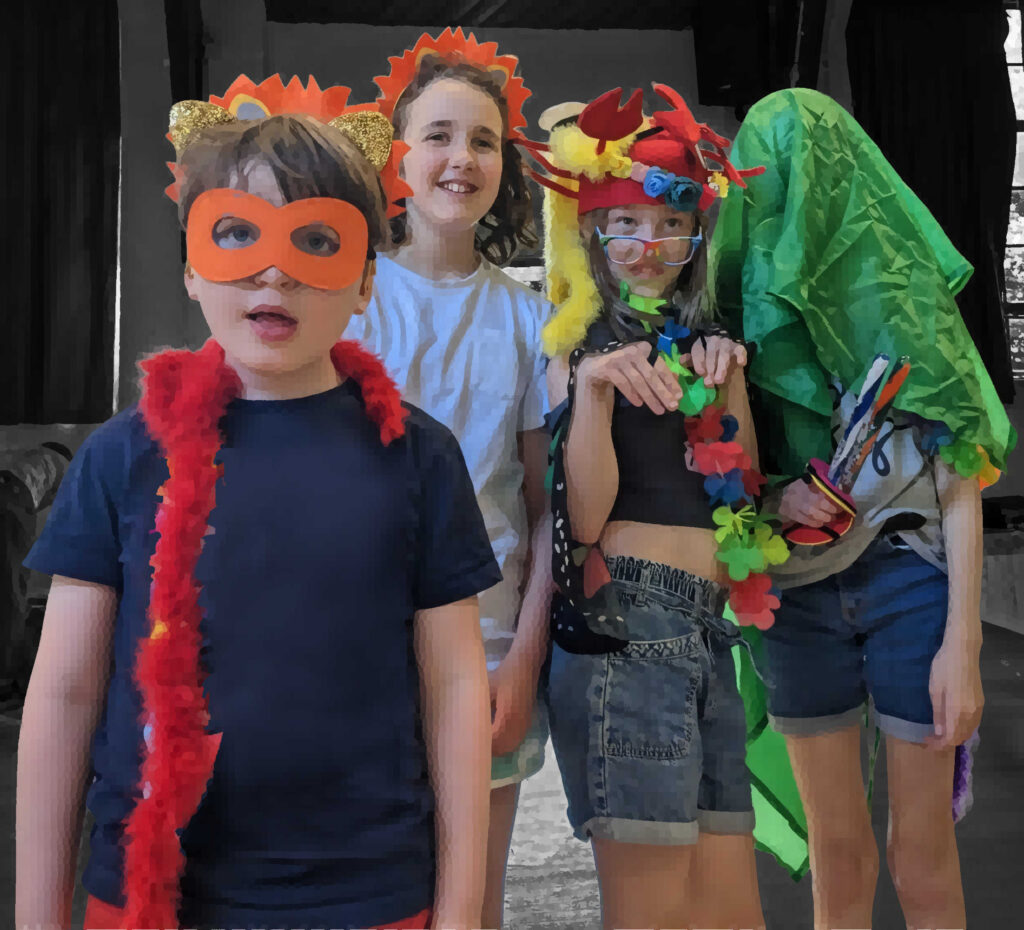
We support kids at our club in the same way. We focus on validating feelings and maintaining connection, we advocate for those having a hard time and help others around them to understand what may have gone wrong, how it felt to that person, that brains can get stuck, that invisible unsaid things may have caused the upset, that no one is to blame, as we try to understand how they may be experiencing the world around them. We support their regulation by co-regulating; we don’t insist on self-regulation, despite the mixed age range of our clubbers. Providing support with such rebel strategies (we don’t think so, but others do) can feel uncomfortable when stepping outside of our club’s neuroaffirming safety bubble. We can be faced with parents who are still in mainstream parenting mode, who are driven by fear that kids will grow up to be an arsehole if you don’t tell them off in front of others and demand compliance like we as ‘good’ parents are expected to do when out in the wild. Oh look, another label…
What other parents out in the wild don’t realise is the history, the depths of trauma and despair that we have worked through, the unravelling, the realisations of our kids inner world, the ways we’ve had to adapt, the progress we have made over time. Burnout causes huge regressions and huge restrictions on our family lives. We aim to avoid ever going back there again, and we want to help others from having to do the same.
We need to flip the narrative and challenge the neuronormative script. We need to feel confident with diving in and supporting those having a hard time, rebelliously advocating for the child’s experience. This can sometimes look unfair from the outside as it can look like the child is being selfish, demanding, not having a fair or equal turn in a game. And sometimes yes, they come across as being rude, either in the words they can access at the time or the tone that so many want to police. But autistic communication IS different and isn’t always verbal.
Demand avoidant kids and PDAers need a radically different approach. Constantly reprimanding them for communicating their needs in the only way they can in the moment shouldn’t be shamed but encouraged. We offer support as problem solvers, not disciplinarians. We are in this for the long game, trying to gain a peek inside and understanding our kid’s inner world. The quick fix telling off & shaming, chucking in consequences for good measure doesn’t help these kids. That’s also not saying that we don’t address these issues, it’s just always done at a point in time when a child is not in distress. They can’t access reason when they are having a big emotional reaction. It needs to be discussed later, when things have cooled off.
Why do we adopt and maintain these rebel strategies? To alleviate the shame and negative labels that they will be given otherwise, which we know will be internalised and become the inner beliefs they have about themselves. We’ve been there ourselves and have suffered from poor mental health because of it. Some experts estimate that children with ADHD hear 20,000 more negative, corrective, or critical messages by age 10 to 12 than their neurotypical peers. We are trying to break the cycle.
We live and breathe our understanding that connection over conforming is the key that will get us to where we all aim for our kids to be. We want them to be adult functioning members of society. But let’s not forget that our kids are still kids and shouldn’t be held to adult standards before their brains have fully developed. Let’s also not forget that doesn’t actually happen until our mid to late 20’s and often continues into our 30’s. The prefrontal cortex, responsible for decision making, emotional regulation and planning, is the last area to mature. So much needs to change in society to support everyone’s natural development, not just the neurodivergent.
We understand our privilege here. White, heterosexual, middle-class, English-speaking, educated professionals. It’s not as easy for other marginalised and underrepresented families with neurodivergent kids. We can’t speak on behalf of others, as we don’t have the same lived experience, but we are here to use our privilege to pave the way. Humans are humans. We want to change society for the better for all, not just for a small subgroup.
Make and Create club gives us a platform to model advocacy, to show others what it looks like, to challenge ideas, to create a safer space for kids and parents to be themselves, to not feel judged in tricky interactions, to instead maintain curiosity, to understand others and to remember that judgement is about the judger, not the judged. We are here to forge a change in attitudes, we are not actively raising arseholes, or criminals or threats to society. But we ARE different thinkers, different parents, different educators. And we’re unapologetic about wanting to change systemic attitudes.
Through our lived experience with changing expectations for our own kids, we are witnessing them gaining skills needed to advocate for themselves. They look beyond behaviours with others, can observe and understand where kids are having a hard time and then identify different parenting strategies that they witness in their everyday lives. They’ll sometimes chat to other parents about what they understand to be the right way to deal with their own children, seeing their behaviourist approaches and advising them on what they could do instead, when considering the situation from the child’s perspective.
So, I’ll say it again. We are not raising arseholes. But we do need to get comfortable with being uncomfortable, if we want to be the change we want to see in the world. To pave the way for all humans, making life better and more inclusive of those who are marginalised and underrepresented.
Leave a Reply
You must be logged in to post a comment.