
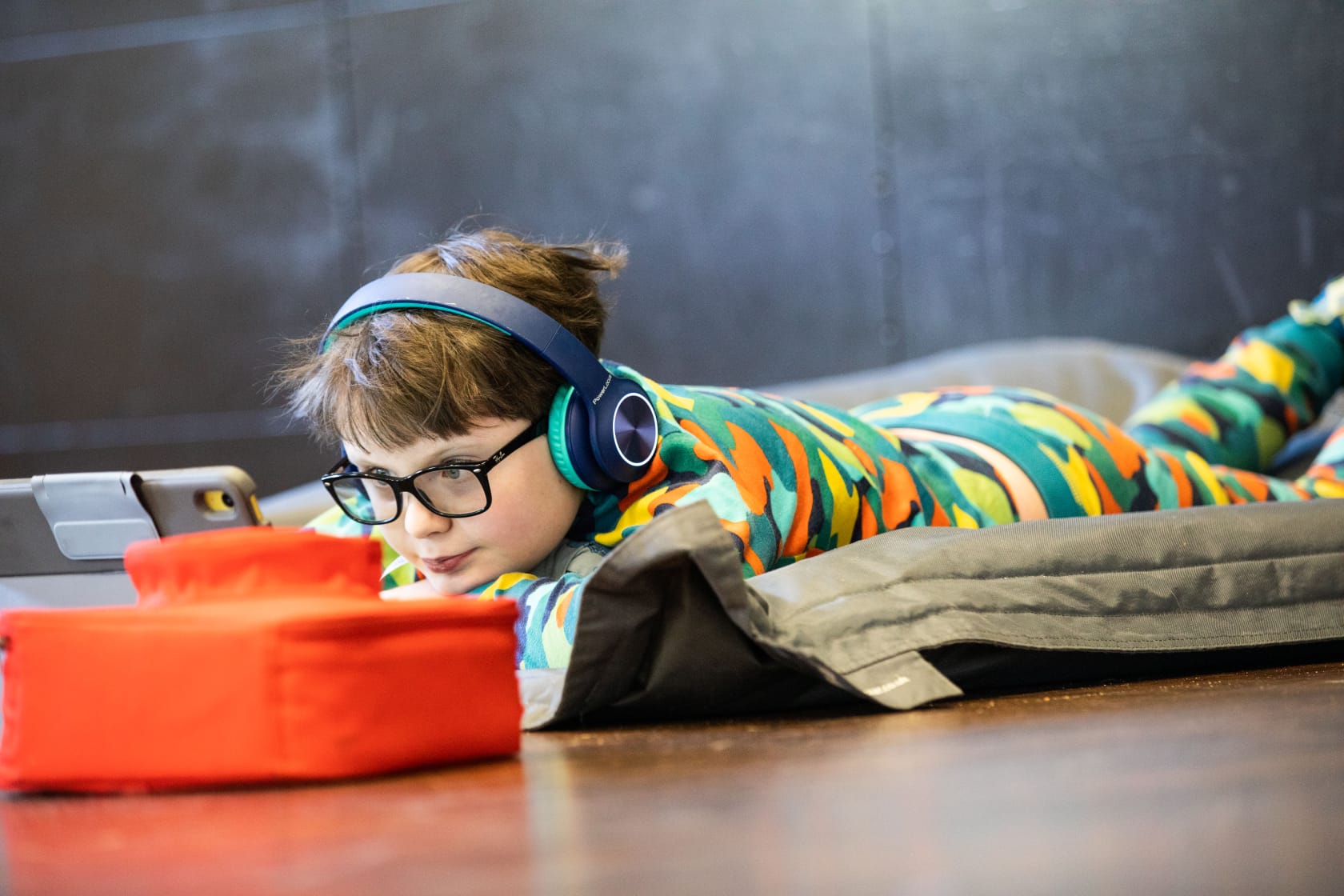
Allowing my child to wear pyjamas when leaving our home may seem like rebellion to some but it’s something I firmly believe in as an accommodation and have stuck to whenever needed. I know it goes against the norm, whilst some schools are still sending out appeals to parents to get themselves dressed before doing drop-offs and pick-ups, instead of entering into conversations about how hard it can be to get their kids ready and in on time, let alone themselves. For some it may be a conscious choice to put their children getting ready first, for others it may be a consequence of a difficult morning, or a day where they are struggling with their own executive functioning or motivation, amongst many other possible causes. I don’t pretend to know all of the issues or experiences either but leave room for learning about them. Parenting a neurodivergent child is hard, especially when you’re neurodivergent yourself. I wonder if anyone has ever asked those parents why they can’t get dressed in the morning…
As a neurodivergent unschooling home educator, I’m always curious about those who do life differently and I’ve been reassessing my thinking around societal ‘norms’ and ‘values’ for quite some time now. I seek out, lean into and listen to those sharing their lived experience as I can’t always find a way to connect with traditional ways of thinking. I would love to see a shift in thinking from society and it’s systems with a compliance based approach at any cost, to move towards more curiosity and understanding.
Did you know that pyjamas were originally comfortable hot climate day wear originating from Asia and are derived from the Persian ‘pai jama’ meaning leg garment? Europeans discovered and adopted them as exotic loungewear in the 17th to 18th centuries. It wasn’t until the late 1800’s that they began to be used as sleepwear and the term ‘pyjama’ shifted it’s meaning to describe a matching jacket and trouser set. The type of pyjamas my son has embraced as comfort clothing have lost the buttons and more formal jacket vibe. Just stretchy, breathable, temperature controlled comfort throughout the day or night.
Believe it or not, I didn’t make a conscious choice to keep my kid in PJs in order to take a stand. I’m not a rebel without a cause. It’s been much more of a necessity in our lives. My child’s neurodivergent profile means they experience a number of sensory sensitivities which can in turn add up to life being much more exhausting for them. His fatigue is real. It’s part of the reason they have experienced burnout at a young age and why we’ve had to make so many accommodations in order to make life more manageable. In the greater scheme of things, constant pyjama wearing hasn’t been an area we, as parents, feel we needed to stress about but know it can be yet another layer of judgement from outside when you need to do life differently.
Understanding the sensory experience of clothing has been a game changer for my radical pyjama acceptance. But here lies the bigger issue. The normative rhetoric seems to follow the lines of putting up with being uncomfortable so you don’t challenge any unwritten rules or make others feel uncomfortable. Or, maybe because it may make others wish they could do the same? I wish everyone knew that for a neurodivergent human, comfortable clothing can make a huge positive difference to their everyday experience and how abelist it is to expect them to push on through, just because that’s what society has designed it’s normative foundations upon. It’s a hard barrier to break through for sure, but also a worthwhile one to have a go at tearing down.
So, how do pyjamas help? Pyjamas support my child’s sensory preferences by being lightweight, less restrictive, more consistent in style and feel, soft and snuggly, comfortable. It’s also enabled us to cut out yet another transition for him into clothing that feels heavier, with more seams & labels & layers. It’s a necessary accomodation which has enabled us to leave our house more, to be more spontaneous when popping to the shops, making trips to the supermarket, or the library just around the corner and making sure our dog gets her walkies. They also part of his sensory first aid kit that help us to get to playdates with friends, attending Make and Create Club weekly, going on more days out, having more holidays. The list really is endless. He has ridden buses, trains and even horses in his pyjamas!
Wearing pyjamas as day wear has often been viewed as lowering standards, but for us they support a more rounded education by enabling him to access more. He doesn’t wear them as a sign of disrespect to anyone. Accessing the world around him outside of the comfort and safety of his own home takes maximum effort already. His PJs are a support tool. He doesn’t need to change into clothes to signal that he is ‘ready’ for the day ahead when learning happens all day everyday in our unschooling lives.
Pyjamas have also supported us both through burnout. Comfortable low demand clothing was essential when our sensory sensitivities were on high alert. Perimenopause added an extra layer of fun to how acutely mine showed up. And what did I do to help myself? I’ve ended up spending a lot of money on purchasing soft, comfortable, baggy clothing which has been necessary as my body won’t tolerate much else. My clothes are all good, but did I mention the huge price tag? And what do they resemble? Yup, you’ve got it, pyjamas. It’s not as if my child doesn’t have comfy clothes options either. He has clothes he can tolerate, but his tolerance window for these is much smaller than his PJs so they are limiting to what we can achieve or for how long as they use up more of his metaphorical spoons. I embrace the fact he is dressed as a win. The definition of clothes is ‘items worn to cover the body’ so his pyjamas are in fact clothes. Clothes can be pyjamas. I’d love for them to stop being judged as otherwise.
It’s also harder to find clothes for my 9 year old (who is now in size 12 to 13 year old clothing) which offer the same level of comfort for him. Clothing designers seem to have decided that boys don’t get to wear leggings once they reach older sizes and most sensory friendly clothing options we have found are limited in colour and design so of no interest to my AuDHDer who enjoys dopamine dressing based around his special interests. Pyjamas are the sweet spot that offer it all. The tags within them seem to also be softer and silkier. Since he was little, he has found comfort in holding them and fiddling with them like a fidget toy. We have upcycled a couple of his old pairs, that were worn through so not suitable for selling on, into his beloved ‘taggy toy’ that he also takes out and about with him as a comfort item. Double pyjama joy and rebellion!
Leave a Reply
You must be logged in to post a comment.